E-commerce lifecycle architecture in Klaviyo
Service:
Email marketing
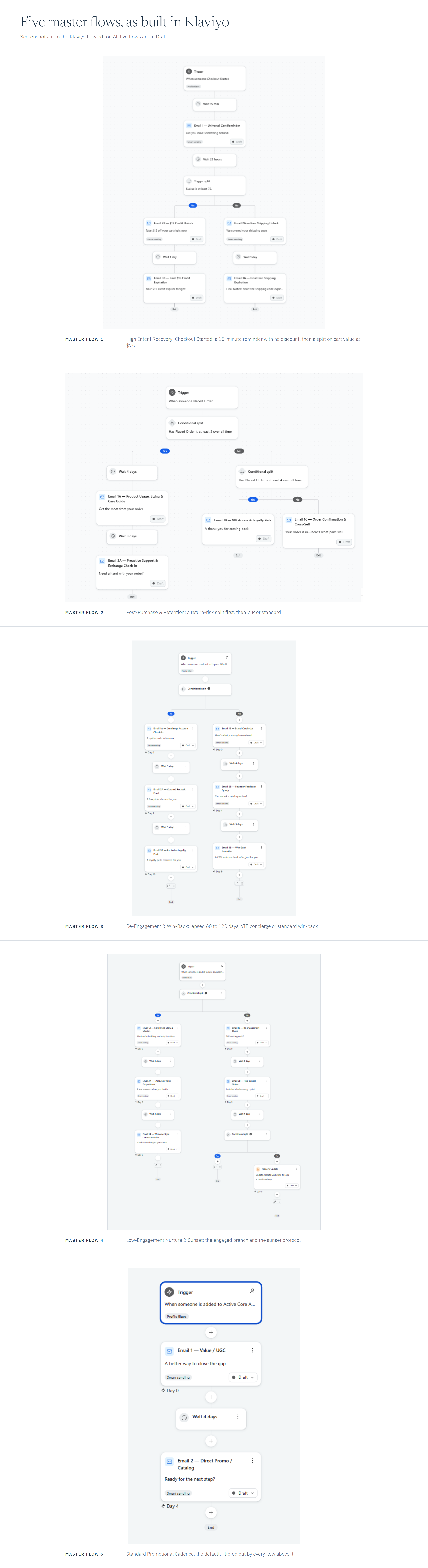
Five master lifecycle flows built in Klaviyo for an e-commerce store, with the segment thresholds taken from a 9,000+ record Kaggle cohort and every email scored on awareness and sophistication before it was written.
Download: Architecture specCopy deckFlow screenshotsSource dataset
Speculative system built in Klaviyo on a public Kaggle sample dataset. The five flows are in Draft and have not sent to a live list. Not built for a client.
Have a brief like this? Book a 30-minute call or email it.
The copy
What was built
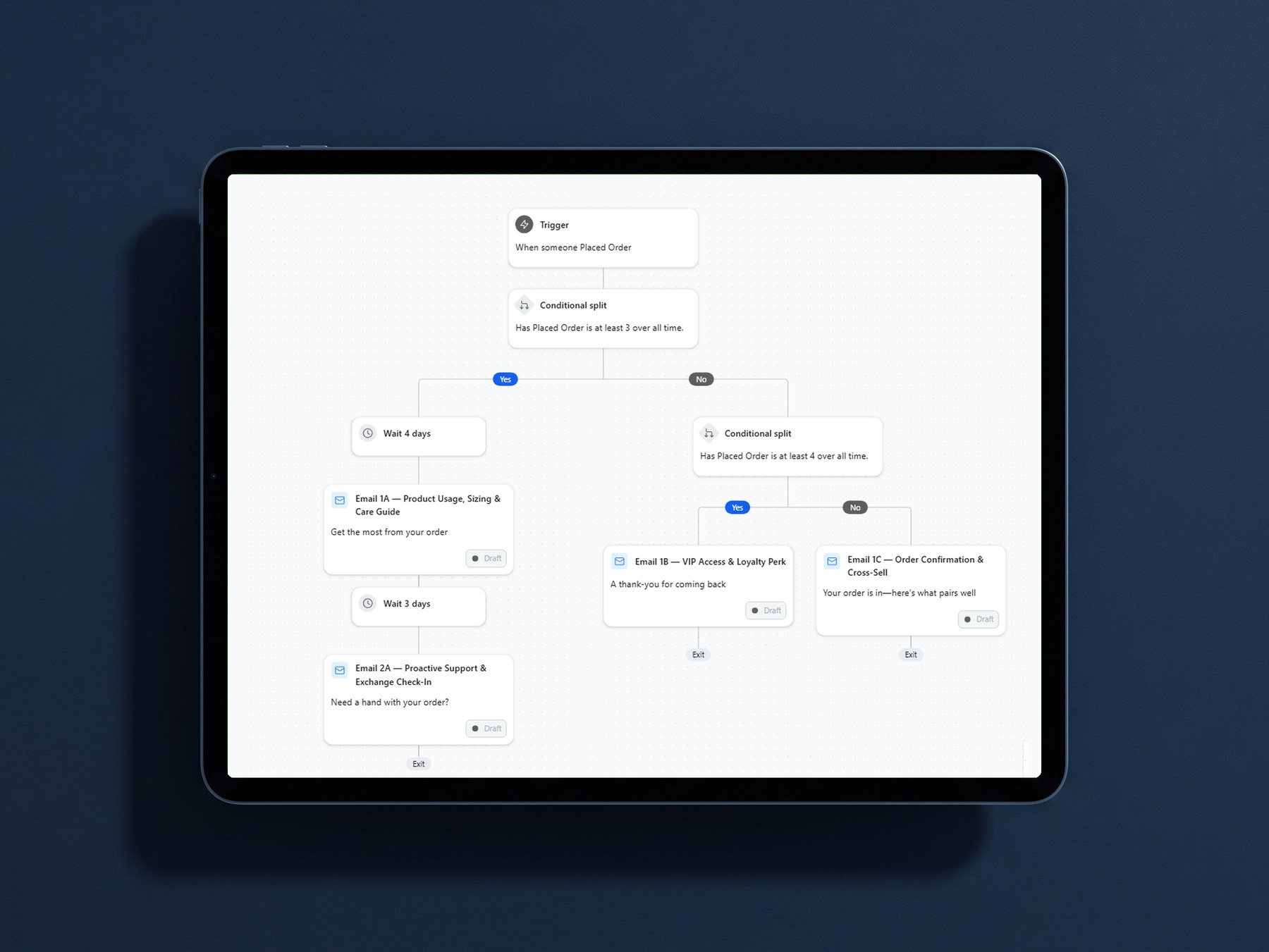
Driven by exploratory data analysis (EDA) of a Kaggle e-commerce dataset, this architecture consolidates 8 overlapping customer segments into 5 Master Lifecycle Flows.
- Master Flow 1: High-Intent Recovery Flow
- Master Flow 2: Post-Purchase & Retention Flow
- Master Flow 3: Re-Engagement & Win-Back Flow
- Master Flow 4: Low-Engagement Nurture & Sunset Flow
- Master Flow 5: Standard Promotional Cadence
Why the flows are ranked
When a customer triggers a browse abandon flow, a post-purchase sequence, and a general promotional broadcast in the same 24-hour window, the result is subscriber fatigue, broken attribution, and margin leakage via unnecessary discounting.
The moment an active recipient triggers a higher-priority event (Checkout Started, Viewed Product >= 3, Placed Order), universal flow filters immediately suppress them from Master Flow 5 and route them to Master Flows 1–4.
How the data drives the splits
Rather than drafting email flows in a vacuum, I analyzed raw customer telemetry across RFM variables (Recency, Frequency, Monetary value), cart abandonment behavior, session depth, and return ratios.
In live execution, Klaviyo does not rely on static CSV syncs. Real-time behavioral events (Started Checkout, Viewed Product, Placed Order) handle sequence triggers, while macro indicators derived from the dataset (Value tier, Return ratio) function as dynamic profile filters.
How the copy was scored
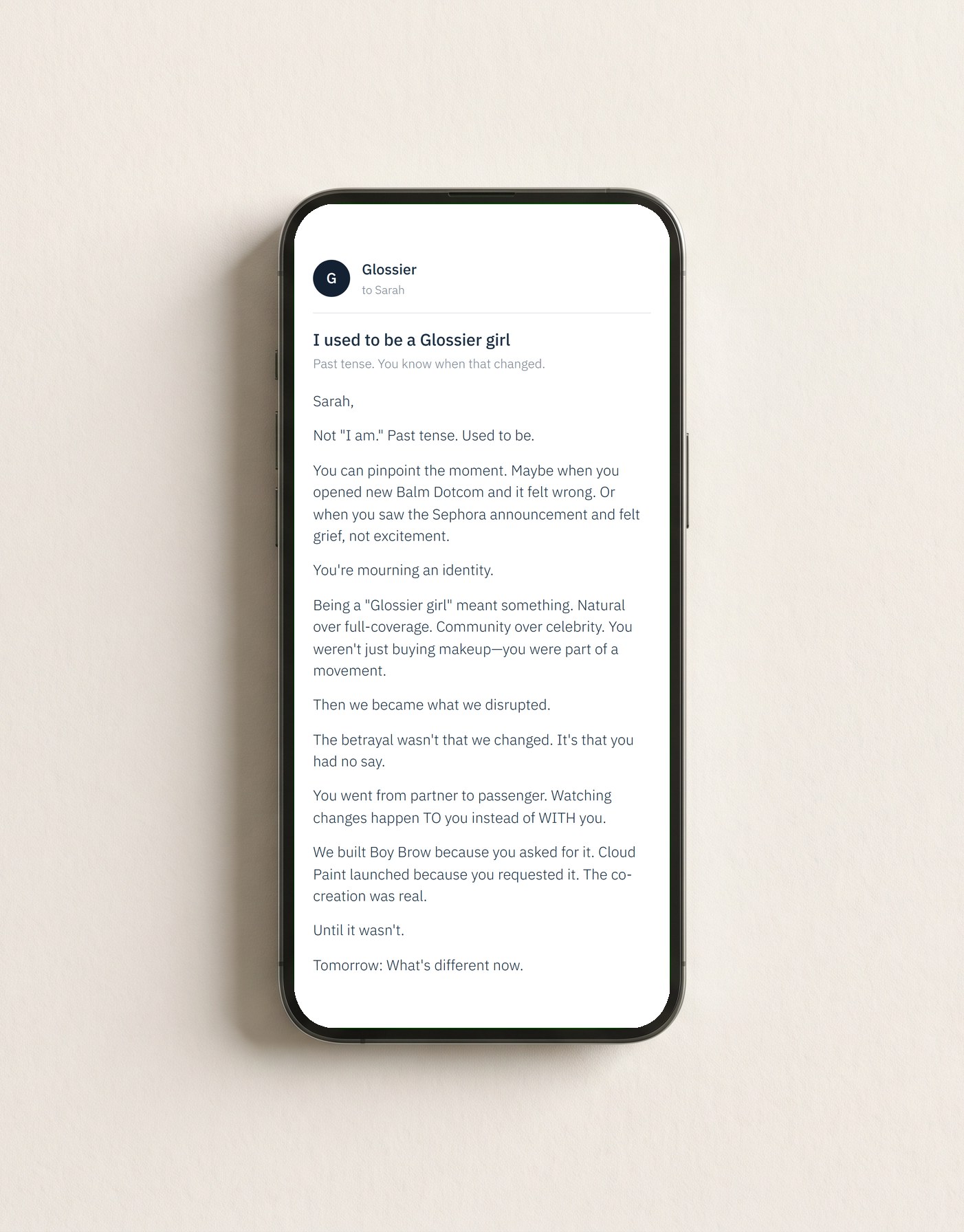
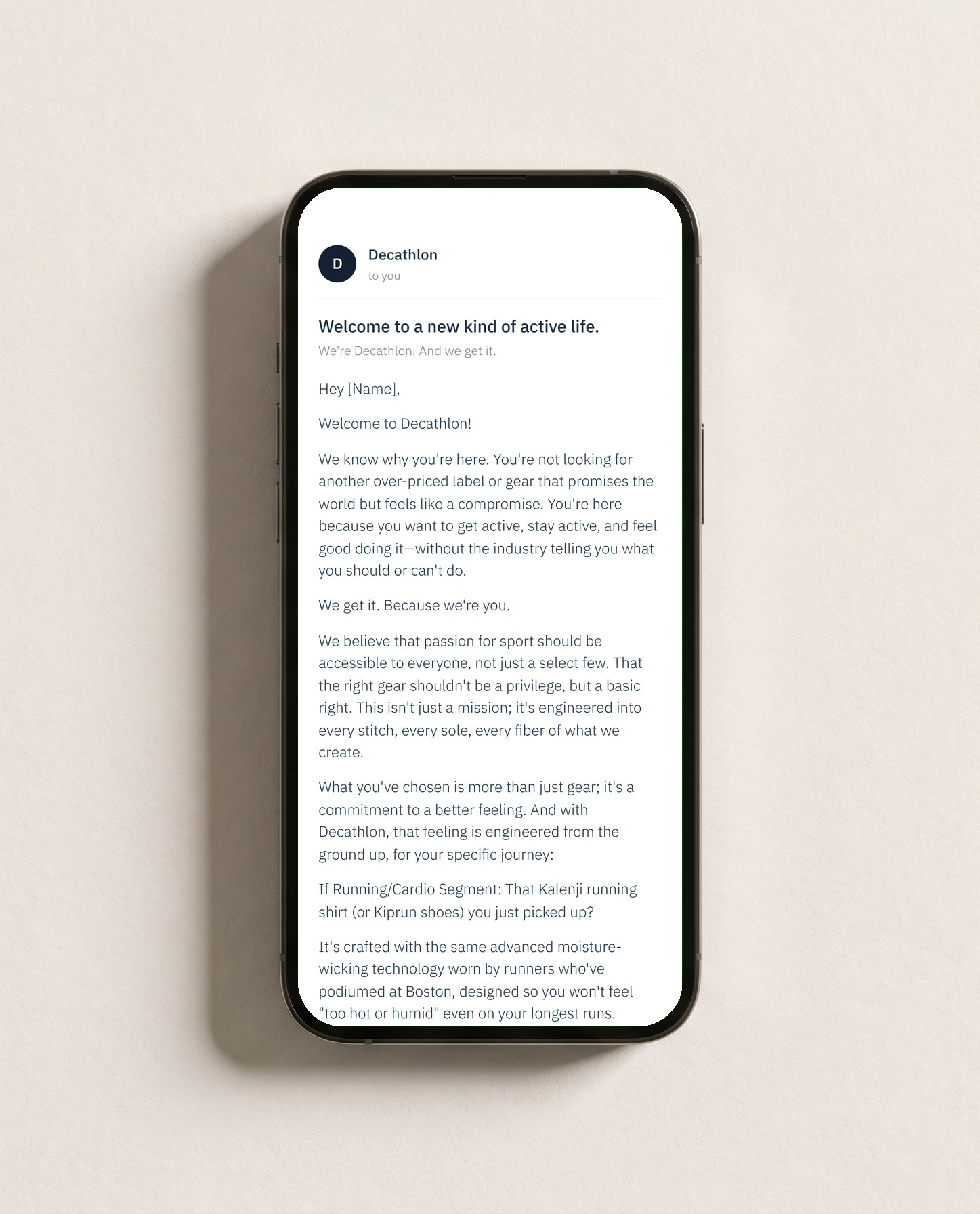
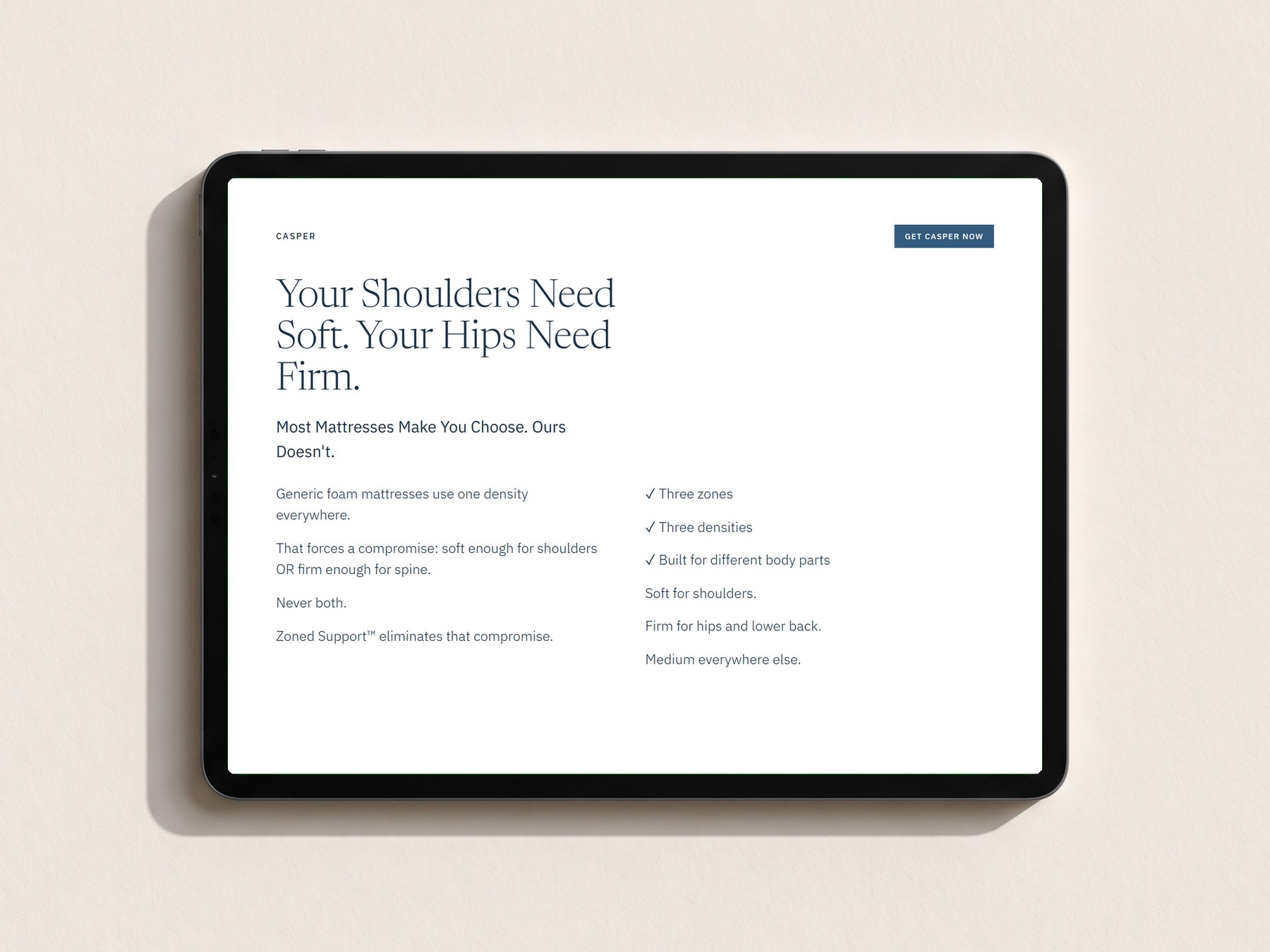
Every node is scored on two axes before a word gets written. The original deck used one voice for the entire customer base regardless of funnel position. A cart abandoner sitting on a $120 cart and a VIP who hasn't ordered in 90 days are different people rhetorically.
Awareness climbs as a customer moves deeper into any single flow (recovery, retention, or win-back), but sophistication doesn't climb linearly with it. Sophistication resets low whenever a segment has gone cold (Flow 3's standard lapsed branch, Flow 4's brand-story node) because dormancy erodes trust in previous claims, even from a Most Aware customer.
The full architecture
The five flow specifications, the copy deck with every email written in full, the flow-builder screenshots and the source dataset are public. The links above open them.
The schematic
Hi, I'm Ezekiel
I partner with B2B SaaS, AI, and Health Tech founders and growth agencies to transform complex technical architecture, raw founder interviews, and strategic briefs into white-label SEO assets, executive newsletters, and conversion lifecycle systems.
- Read the writingBylined articles, the NEST Notes newsletter and two essays on how I write.
- Services and ways to workRetainers, overflow and fixed-scope packages.
- All workEvery piece on the site, filterable by lane.